
Having the right legal representation is important, even in civil litigation matters. Hiring a civil lawyer ensures you have a knowledgeable advocate to protect your interests in complex legal disputes. Albert and Peter Maimone provide comprehensive legal assistance in a wide range of civil matters in Queens, New York, including property damage, breach of contract, neighbor disputes, and personal injury. Their deep understanding of civil law, combined with their experience and thorough approach, enables them to develop practical solutions for resolving your legal issues effectively.
A civil lawyer is a trained professional who can navigate the complicated legal landscape in issues that do not involve criminal charges. Whether you are facing a lawsuit, involved in a contract dispute or need help resolving a family matter, civil lawyers can handle conflicts confidently.
Civil lawyers play a crucial role in maintaining the balance of justice and fairness in civil matters through their knowledge and skills. They ensure private disputes are settled efficiently and justly, and individuals and organizations uphold their rights and responsibilities under the law.
Read on to learn what a civil lawyer is, what exactly they do, the types of cases they handle, and how to know when it is time to find one.
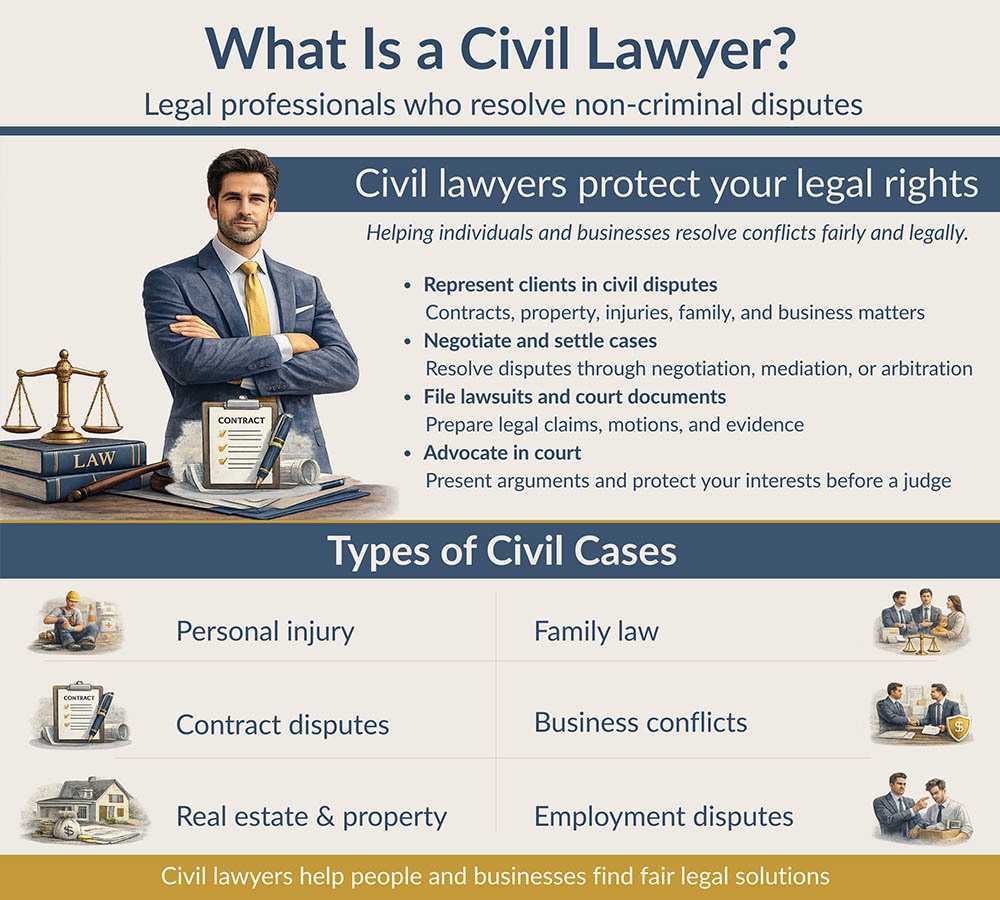
What Is a Civil Lawyer?
Civil lawyers are much more than just litigators. They are strategic advisors, skilled negotiators, and problem-solvers who help clients deal with a wide range of legal issues, often before they even reach the courtroom.
Civil lawyers guide clients through the complexities of the civil litigation process, which includes gathering evidence, drafting legal documents, negotiating settlements, and advocating in court to protect their rights for a favorable outcome. They safeguard your interests and provide the experience and strategic support necessary to work through the legal system competently.
A civil lawyer can practice in several areas, but most lawyers specialize in one, such as personal injury, contract disagreements, real estate, or estate planning. Their expertise helps prevent costly mistakes, accelerates resolutions, and increases the likelihood of positive results for their clients.
Types of Civil Lawyers
There are many types of lawyers specializing in civil law, each focusing on specific types of non-criminal disputes between individuals, businesses, or government entities.
They can include:
- Real estate lawyers
- Family lawyers
- Labor and employment lawyers
- Intellectual property lawyers
- Workers’ compensation lawyers
- Business and commercial lawyers
- Personal injury lawyers
- Employment lawyers
- Family court lawyers
- Environmental lawyers
- Civil rights lawyers
- Education lawyers
What Does a Civil Lawyer Do?
Civil lawyers represent their clients in civil law cases. Also known as a civil litigation attorney, a civil lawyer handles non-criminal legal issues between individuals, businesses, or government entities. Their main responsibility is to resolve their clients’ conflicts through negotiation, mediation, arbitration, or court trials. From the initial filing of a lawsuit through litigation, and potential court proceedings, civil lawyers guide their clients through every stage of the legal process.
Civil lawyers are experts in their field and can make sense of the legal jargon and procedures involved in filing a lawsuit against someone. They work to protect their clients’ interests while striving for fair and efficient resolution of disputes, whether through settlement or trial. They can determine whether a case needs to go before a judge or if it can be resolved outside the court.
By providing clear guidance and strong representation, civil litigators ensure that their clients are well-informed and positioned for the best possible outcome.
The Difference Between a Civil and a Criminal Lawyer
The difference between a civil and criminal lawyer lies in the type of law they practice and the kind of cases they handle.
A civil lawyer handles disputes between individuals or organizations, such as contract issues, personal injury, or property disagreements, where no criminal laws have been broken. Their aim is to seek financial compensation or other remedies for their clients. In contrast, a criminal lawyer defends individuals accused of crimes such as theft or assault, and works to protect them from conviction or severe penalties.
The Civil Litigation Process – What Does It Involve?
Civil litigation is a legal procedure that plays a crucial role in resolving disputes between two or more parties in non-criminal matters. Whether you are suing someone or have been sued, understanding the steps involved is essential for protecting your rights and preparing for what comes next.
Even though every case is unique, the general civil litigation process typically follows these steps:
- Filing a petition
A civil lawyer begins the process by filing a petition with the court. This document outlines the basis of the lawsuit and explains why legal action is being taken against the other party. Once filed, the petition and summons are served to the defendant, the person or entity being sued. This formally notifies them of the claims made against them and provide a deadline by which they must respond.
- Discovery
During this phase, lawyers gather evidence to support their case. This may involve interrogatories or written questions, requests for documents, depositions, or sworn out-of-court testimony and expert evaluations. These steps are essential for building a strong and well-supported claim and preparing for trial or settlement.
- Pre-trial motions and hearings
Lawyers may file motions to resolve certain issues before trial, such as a motion for summary judgment, which asks the court to decide the case based on undisputed facts. The court may also hold hearings to address procedural matters and determine which issues will move forward to trial.
- Settlement negotiations
Many civil cases are resolved before they even reach trial. Lawyers usually attempt to settle through direct negotiation, mediation, or arbitration. It can help save significant time, money, and stress for everyone involved.
- Trial
If the settlement does not work, the case will proceed to trial. Each side will present evidence and arguments before a judge or jury, who will make the decision. Trials can be complex and lengthy based on the nature of the dispute.
Your litigator will assess the best strategy to resolve your dispute, whether through a negotiated settlement or by taking the case to court. They will engage with the opposing party and their legal counsel to pursue an outcome that protects your interests and, where possible, works well for both sides.
The civil litigation process can feel intimidating but understanding how the process works and what to expect from your lawyer can help you move forward with confidence. With the right legal guidance, you can navigate each stage effectively and move towards a fair and favorable resolution.
When to Hire a Civil Litigation Lawyer?
There are many reasons why an individual or a business may require the assistance of a civil lawyer. Whether you are going through a difficult divorce and struggling to agree on support payments or having rental deposit repayment issues with your landlord, and mediation has failed, you may need a civil lawyer.
Usually, parties try to settle matters among themselves through mediation or a round table, but this is not always possible. Any dispute that needs to be resolved in court or before a tribunal may require a civil litigator.
There are many other transactions that are legal in nature and require specialized knowledge to protect your personal or business interests. If you are a business owner selling or purchasing a property, a civil lawyer has the expertise to review and draft contracts, ensuring you do not end up in any unnecessary litigation in the future.
How Much Does It Cost to Hire a Civil Lawyer?
The cost of hiring a civil lawyer can vary widely depending on many factors, including the complexity of the case, the lawyer’s area of specialization, their level of experience, location, and the amount of work the case requires.
Most civil lawyers charge an hourly rate based on their location and expertise. Also, some lawyers require a retainer, or upfront payment, in addition to their hourly rate to cover any extra expenses during the legal process. It is best to speak directly to a few lawyers in your area to get an idea of how much your case could cost.
If you believe you may need to file a civil lawsuit, consulting a civil lawyer in Queens is the first step. They can help you understand what the process will be like and guide you toward the most effective course of action. At Albert Maimone & Associates P.C., we are dedicated to achieving your legal goals with clarity and care. Our experienced and knowledgeable civil lawyers in Queens provide clear guidance, strong representation, and personalized strategies that are designed to resolve your civil disputes successfully.